'/%3e%3c/g%3e%3cg%20id='eu-c'%3e%3cuse%20xlink:href='%23eu-b'%20transform='rotate(72)'/%3e%3cuse%20xlink:href='%23eu-b'%20transform='rotate(144)'/%3e%3c/g%3e%3cuse%20xlink:href='%23eu-c'%20transform='scale(-1%201)'/%3e%3c/g%3e%3c/defs%3e%3cpath%20fill='%23039'%20d='M0%200h640v480H0z'/%3e%3cg%20fill='%23fc0'%20transform='translate(320%20242.3)scale(23.7037)'%3e%3cuse%20xlink:href='%23eu-d'%20width='100%25'%20height='100%25'%20y='-6'/%3e%3cuse%20xlink:href='%23eu-d'%20width='100%25'%20height='100%25'%20y='6'/%3e%3cg%20id='eu-e'%3e%3cuse%20xlink:href='%23eu-d'%20width='100%25'%20height='100%25'%20x='-6'/%3e%3cuse%20xlink:href='%23eu-d'%20width='100%25'%20height='100%25'%20transform='rotate(-144%20-2.3%20-2.1)'/%3e%3cuse%20xlink:href='%23eu-d'%20width='100%25'%20height='100%25'%20transform='rotate(144%20-2.1%20-2.3)'/%3e%3cuse%20xlink:href='%23eu-d'%20width='100%25'%20height='100%25'%20transform='rotate(72%20-4.7%20-2)'/%3e%3cuse%20xlink:href='%23eu-d'%20width='100%25'%20height='100%25'%20transform='rotate(72%20-5%20.5)'/%3e%3c/g%3e%3cuse%20xlink:href='%23eu-e'%20width='100%25'%20height='100%25'%20transform='scale(-1%201)'/%3e%3c/g%3e%3c/svg%3e) Developed & manufactured in EU
Developed & manufactured in EU The independent European alternative to DJI AeroScope®
A passive drone detector, developed and manufactured in Slovakia, EU. It receives Remote ID and DJI DroneID up to OcuSync 4+ and shows you where every drone and the pilot is located. No subscriptions, optionally fully air-gapped.
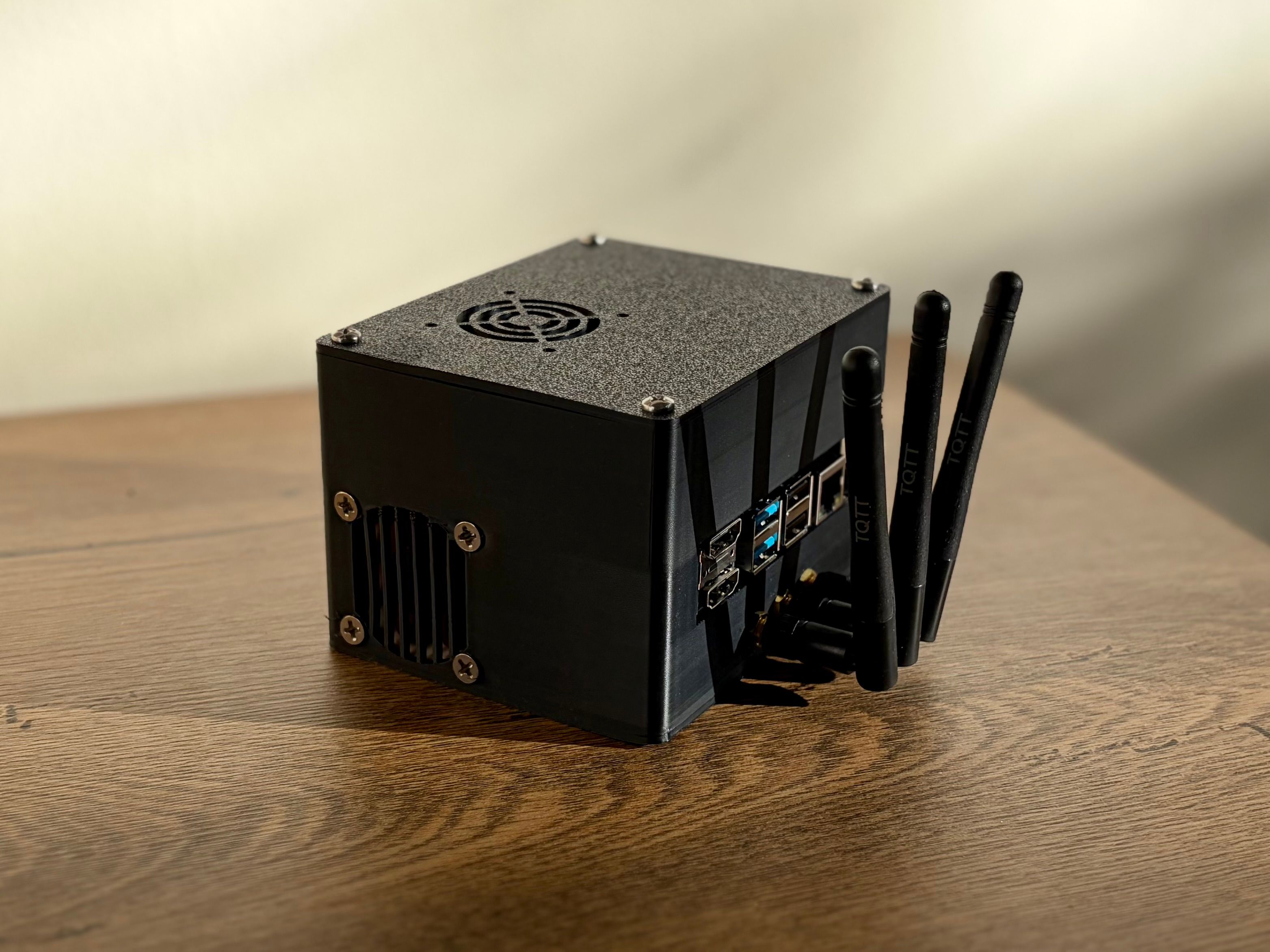
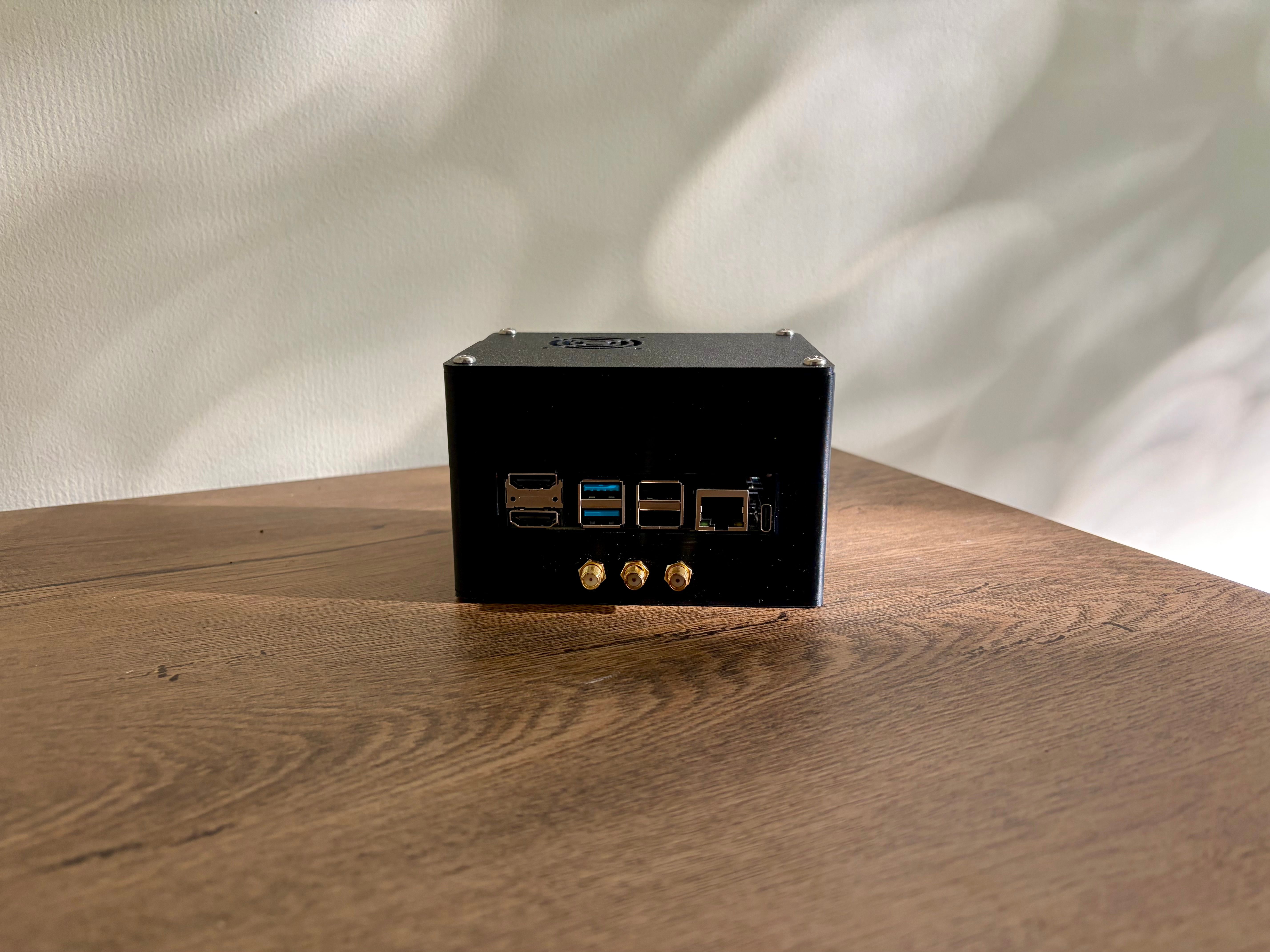
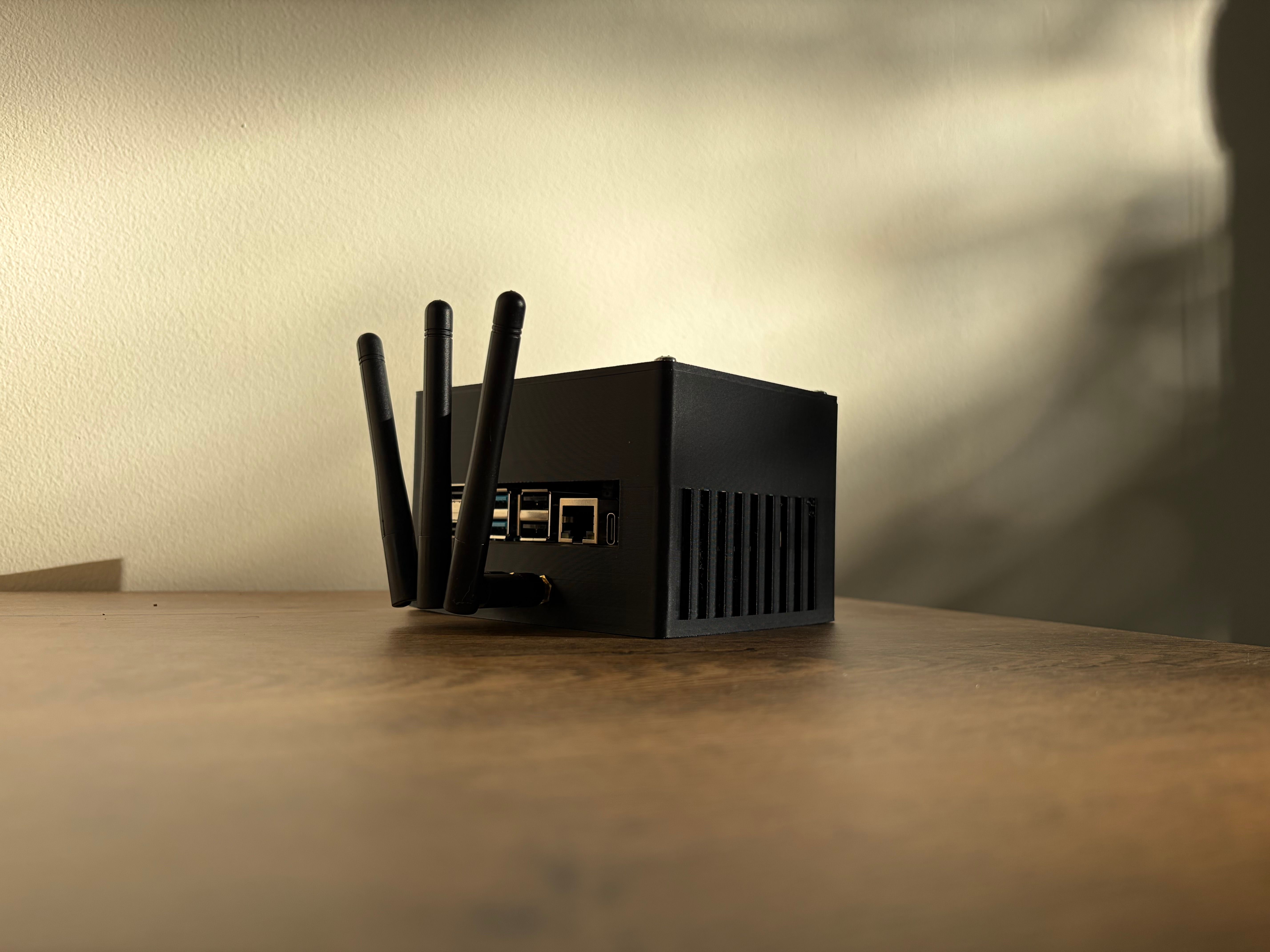
Why DroneWard One
OcuSync 4+ processed on the device
Every detection, including DJI DroneID up to OcuSync 4+, is decoded and stored on the detector. Standard setup: only one encrypted key frame ever leaves the unit. With the optional on-device decryption module, nothing does, and the detector runs fully air-gapped.
No subscription. Ever.
You buy the detector and you own it. No per-seat licences, no annual fees, no features behind a paywall. You decide when to install updates.
Built by a European team
Designed, engineered, and assembled by our EU-based team.
Software fully under our control
We write and maintain the firmware ourselves. We don't outsource development of firmware to 3rd-party companies.
The 250-gram blind spot
The problem: Standard Remote ID receivers miss drones under 250 g.
Why: Regulation exempts them from Remote ID — including DJI Mini and Neo class drones.
DroneWard's solution: These drones still transmit DJI DroneID, which we detect.
Detect. Locate. Act.
Detect
The sensor passively receives every Remote ID and DJI DroneID broadcast in range — encrypted included, up to OcuSync 4+. It transmits nothing, so it's silent, legal to operate, and invisible to the drone's operator.
Locate
Every detection appears live on your dashboard: aircraft type, position, flight path, home point — and the pilot's location.
Act
The moment anything enters your airspace, your team gets an alert with live coordinates - for the drone and the person flying it. Every flight is tracked and logged as evidence.
Can't process the detection? It's not lost. Raw detections are stored on-device. When an update adds support for a previously unknown or unsupported packet, stored records can be reprocessed and identified retroactively. You choose when to install updates. Records are typically retained for several months.
Built for the sites that can't have surprises overhead
Airports & heliports
Monitor approach paths and the airport perimeter for unauthorized drones, including sub-250 g models that don't broadcast Remote ID.
Energy & utilities
24/7 stationary monitoring of power plants, substations and pipelines. Suitable for nuclear sites.
Stadiums & public events
Portable unit for temporary deployments. Monitor the airspace over the venue and locate pilots in real time.
Critical infrastructure
Detect every drone over your site and locate its operator, around the clock. Stationary sensors cover the perimeter, run on your hardware, and can operate air-gapped.
Technical parameters
What the unit receives, how far it reaches, and where the data ends up. Datasheet will be available later when the unit is finalized.
- Protocols
- Remote ID (ASD-STAN / ASTM F3411) · DJI DroneID incl. encrypted, up to OcuSync 4+
- Detection range
- With omnidirectional antenna up to 10 km, in the city 5 km, terrain dependent
- Emissions
- None — fully passive receiver
- Data handling
- All processing on-device · optional air-gapped decryption module for DroneID
- External Integrations
- MQTT · WebHook · WebSockets · raw packet forwarding
- Deployment
- Stationary (PoE+) or portable unit (power via USB-C)
- Dashboard
- Served by the device — open in browser from Win / Mac / iOS or Android.
Frequently asked questions
Yes. The detector only listens. It never transmits, doesn't jam anything, and doesn't interfere with the drone in any way — legally it's a radio receiver, same category as ADS-B or RemoteID receiver. Rules on what you may do with recorded data differ between countries.
AeroScope was made by DJI and detected only DJI drones. It was discontinued in 2023 and existing units no longer get updates or service support. Our detector is developed independently in Slovakia, reads DJI DroneID including the encrypted version up to OcuSync 4+, plus standard Remote ID from any manufacturer — and everything runs on the detector itself. And it's actively developed.
We can't see them — nobody can detect a signal that doesn't exist. The good news is that most drones people actually fly are DJI or other consumer models, and those broadcast DroneID or Remote ID. That's what we cover today. FPV and custom-built drones usually don't broadcast any ID, but most of them still transmit something — typically their video feed. Once our product is established, adding FPV detection is next on our list. And if you need to cover truly silent drones today, that's radar or optical territory; our detector plugs into those systems - check External Integrations in Technical Parameters section.
It stays on the device. Detections, flight paths, pilot positions, logs — everything is stored and processed locally, and you view it through the dashboard the detector itself serves.
The one exception in the standard setup is DroneID (from OcuSync 4 and higher): to decrypt it, the device sends a single packet — the encrypted key frame — to our server and gets the key back. No detection data, no telemetry, just that one frame.
If even that isn't acceptable for your site, order the detector with the optional on-device decryption module: then everything is decrypted locally, no key is ever sent, and the device is fully offline.
You won't lose it. The device stores raw detection data, including packets the software can't yet interpret. When you choose to install an update that adds support, those records can be reprocessed and identified retroactively. Storage is finite, so older records are overwritten first — typically after a few months, depending on capacity and airspace activity.
Nothing, really. The detector runs its own web server — plug it in, open it by IP address in your browser, and you're looking at the dashboard.
Not yet. We're preparing the first production run. You can reserve a unit now and we'll contact you the moment yours is ready.
Yes. The detector pushes detections over MQTT, WebHook or WebSockets, and it can forward the raw received packets untouched if you want to process them yourself. If you're a system integrator, we're ready to work with you — get in touch.
Let’s talk.
Book a short call — you'll talk directly with our CEO or CTO, not a sales team. We'll discuss your situation, answer the technical questions, and agree on the next step.
If it makes sense, we can arrange a pilot deployment at your site so you can evaluate the system in your own environment. We'll work out the right setup together, wherever you're based.
If it’s a good fit for both sides, we’ll put you on the list for the first units.
Prefer email? Write to us at [email protected]
Roadmap
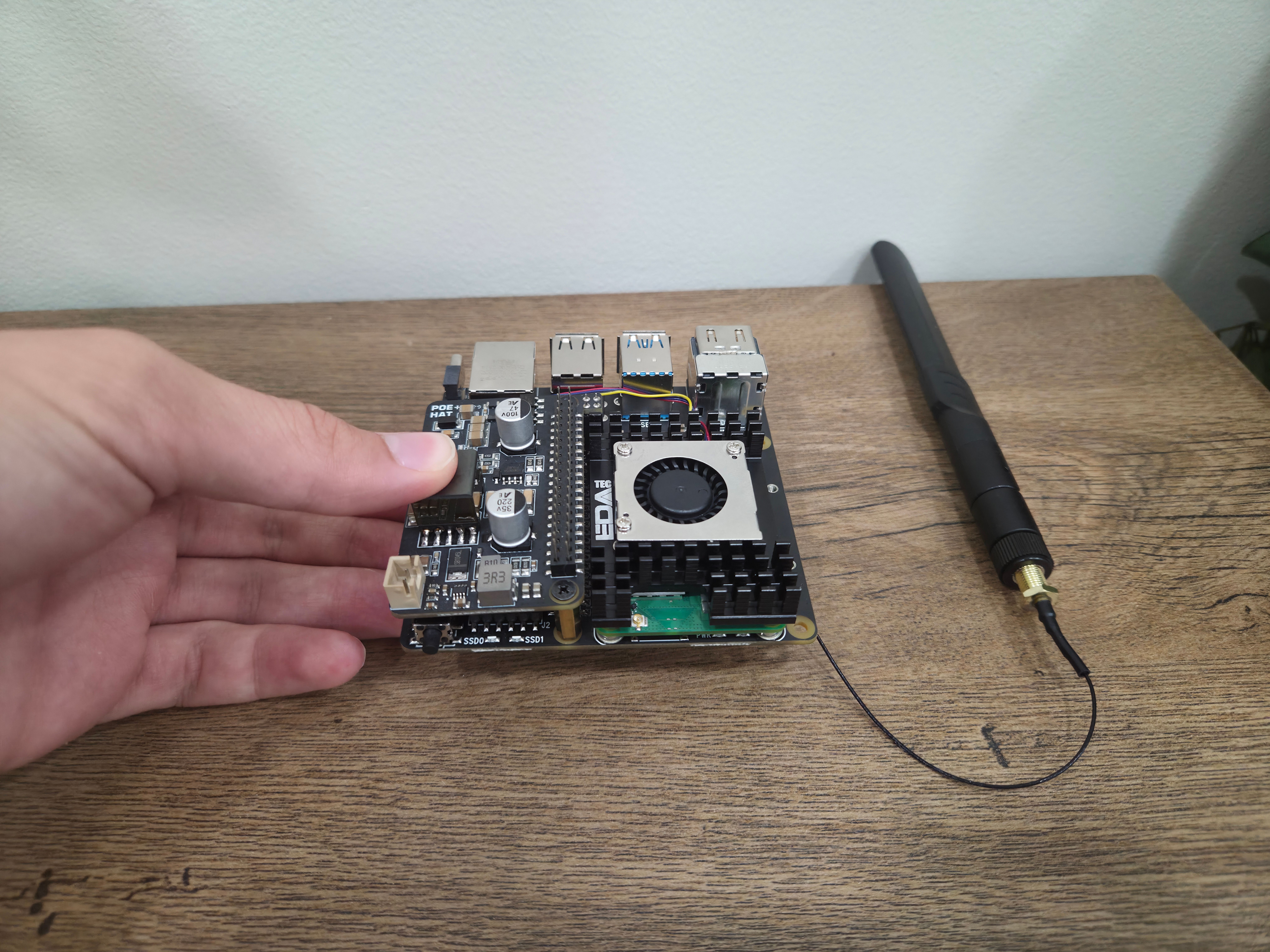
Verified Outside with Omni Directional Antenna
We have successfully verified that our detector works with an omnidirectional antenna, achieving a range of 3.5 km in the city.
Read more